
30 Real Estate Newsletter Ideas Your Clients Will Actually Open

The real estate newsletters that get opened are short, local and useful: a few numbers about the reader’s neighborhood, a handful of homes worth seeing, one practical tip and a personal note. Send monthly, write a subject line that promises something specific, segment buyers from homeowners when you can, and always include an easy way to reply.
A newsletter is the easiest way to stay in front of everyone you know at once: buyers you're working with, leads who aren't ready and every past client who might send you a referral. The hard part isn't sending it. It's having something worth saying every month. Here are 30 ideas, organized by who they're for, plus a calendar to plan a full year.
What makes a real estate newsletter worth opening
- It's local. National headlines are everywhere. Your town's numbers aren't.
- It's short. Two minutes to read, tops.
- It's useful. A number, a home, a tip, or an answer.
- It's from you. A personal line at the top beats a corporate intro.
- It's easy to reply to. End with a question, not just a logo.
Ideas for buyers and leads
- New listings worth a look. Three to five homes with one line each on why they stand out.
- What your budget buys right now. Compare what $450k, $600k and $800k get in a few towns.
- How fast homes are selling. Median days on market in your area this month.
- Pre-approval explained in five minutes. What it is, why it matters, how long it takes.
- Closing costs, demystified. What they cover and roughly what to budget.
- The best-value neighborhoods. Areas where buyers get more for their money.
- Questions to ask at a showing. Borrow from our showing feedback guide.
- A just-closed buyer story. How a client found their home (with permission).
- First-time buyer programs in your state.
- Open house roundup for the coming weekend.
Ideas for homeowners and past clients
- Neighborhood sales recap. What sold near them, and for how much.
- What's your home worth? An offer to run a quick estimate.
- Seasonal maintenance checklist. Gutters in fall, AC service in spring.
- Projects that add value, and ones that don't.
- Property tax and assessment reminders, with local deadlines.
- Local business spotlight. A favorite bakery, contractor or landscaper.
- Community events this month.
- Home anniversary shout-outs (with permission).
- Moving up or downsizing? What the math looks like right now.
- Refinancing basics, with a lender partner's input.
Ideas for everyone
- Your local market in three numbers.
- Myth vs fact about buying or selling right now.
- Behind the scenes of a deal (anonymized).
- A quick poll. "What's your biggest question about the market?"
- Holiday or seasonal notes, kept short and personal.
- Home safety tips: smoke detectors, winter storms, hurricane prep.
- Your favorite local spots, updated each season.
- Client thank-you and referral note.
- "Ask me anything" answers from questions clients sent you.
- Year in review: your market, your clients, your thanks.
A 12-month newsletter calendar
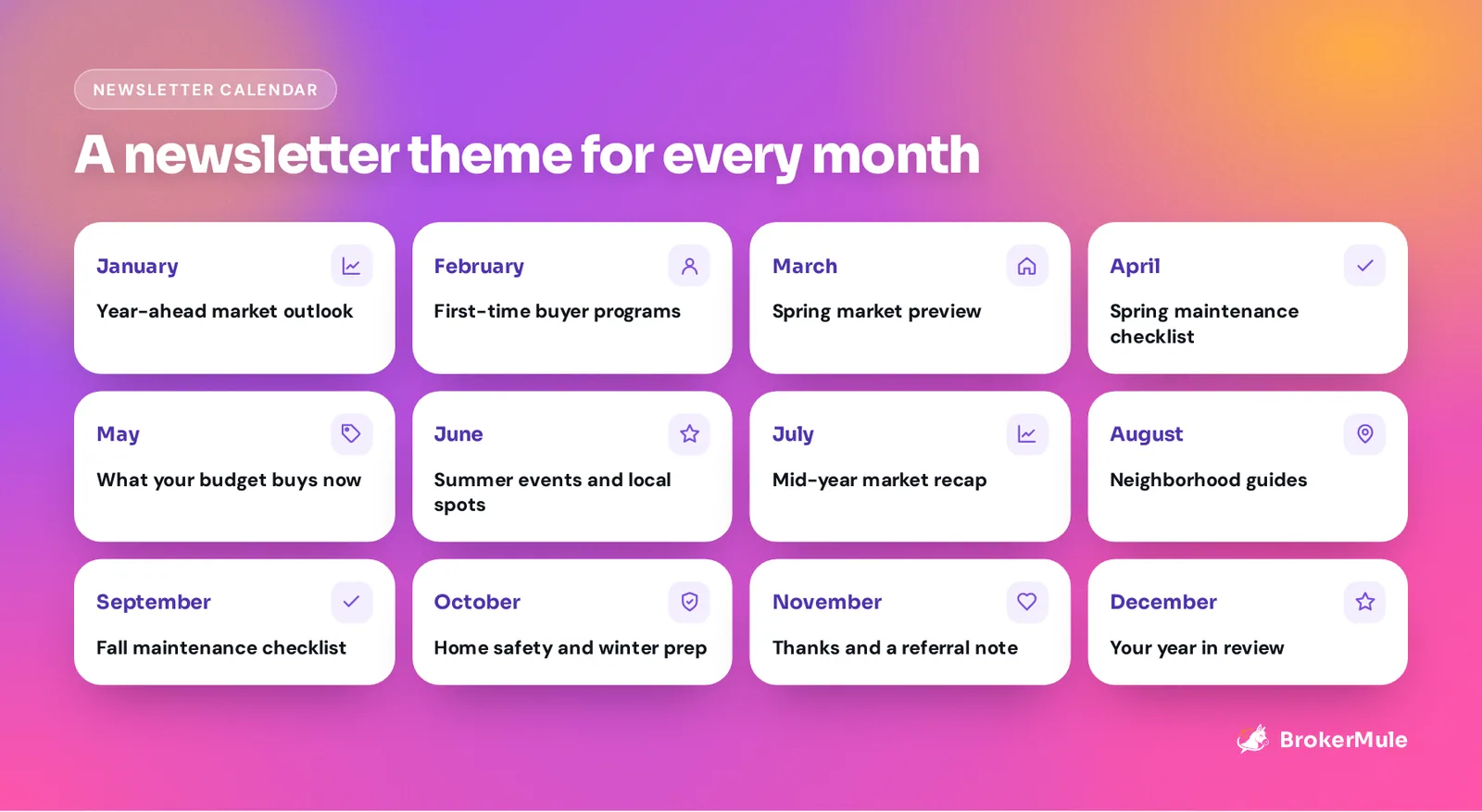
| Month | Theme |
|---|---|
| January | Year-ahead market outlook |
| February | First-time buyer programs and pre-approval |
| March | Spring market preview and listings |
| April | Spring maintenance checklist |
| May | What your budget buys now |
| June | Summer events and local spots |
| July | Mid-year market recap |
| August | Back-to-school and neighborhood guides |
| September | Fall maintenance checklist |
| October | Home safety and winter prep |
| November | Thanks to clients and referral note |
| December | Year in review |
Subject lines that get opened
- What sold on your street this month
- 3 homes under $600k worth seeing this weekend
- How fast homes are selling in Fairhaven right now
- Your 10-minute fall home checklist
- What $500k buys in 4 South Coast towns
- Quick question about your move
Specific beats clever. A number or a place name tells the reader exactly why to open it.
How often to send
Monthly is the sweet spot for most agents: often enough to be remembered, rare enough to stay welcome. Active buyers should hear from you more often, but by text with homes that match their search, not by newsletter. Our real estate drip campaign examples show how the two fit together.
Sending your newsletter
Whatever tool you use, make sure you can:
- Use a branded template with your photo, name and colors
- Personalize with merge tags like first name and city
- Preview before sending and send yourself a test
- Choose recipients for each send
- Include a working unsubscribe link on every email
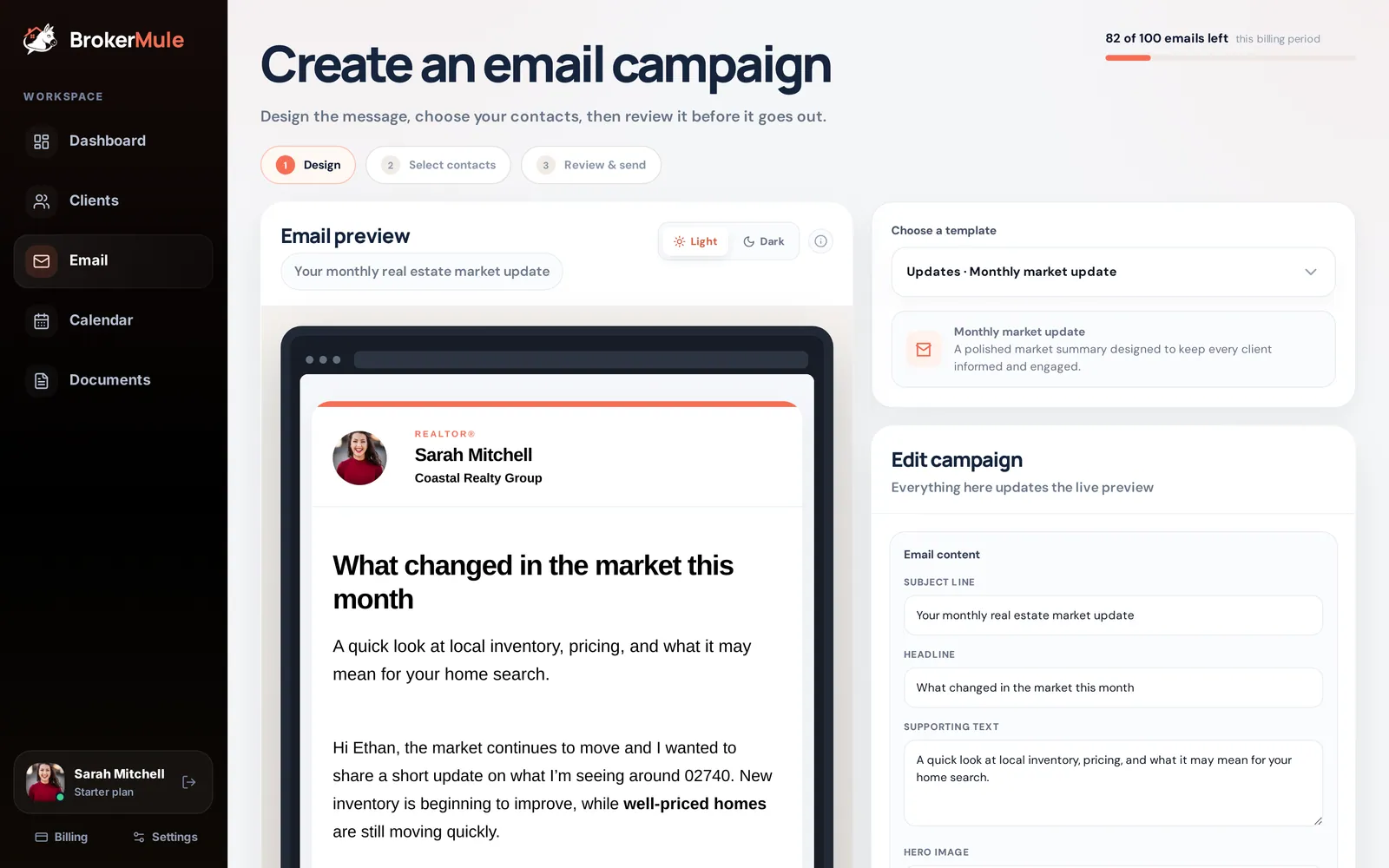
BrokerMule's email campaigns do all of that, with templates such as Monthly market update, Open house roundup and Personal client check-in, plus seasonal notes. Your branding comes from your settings.
Do it in BrokerMule
All guides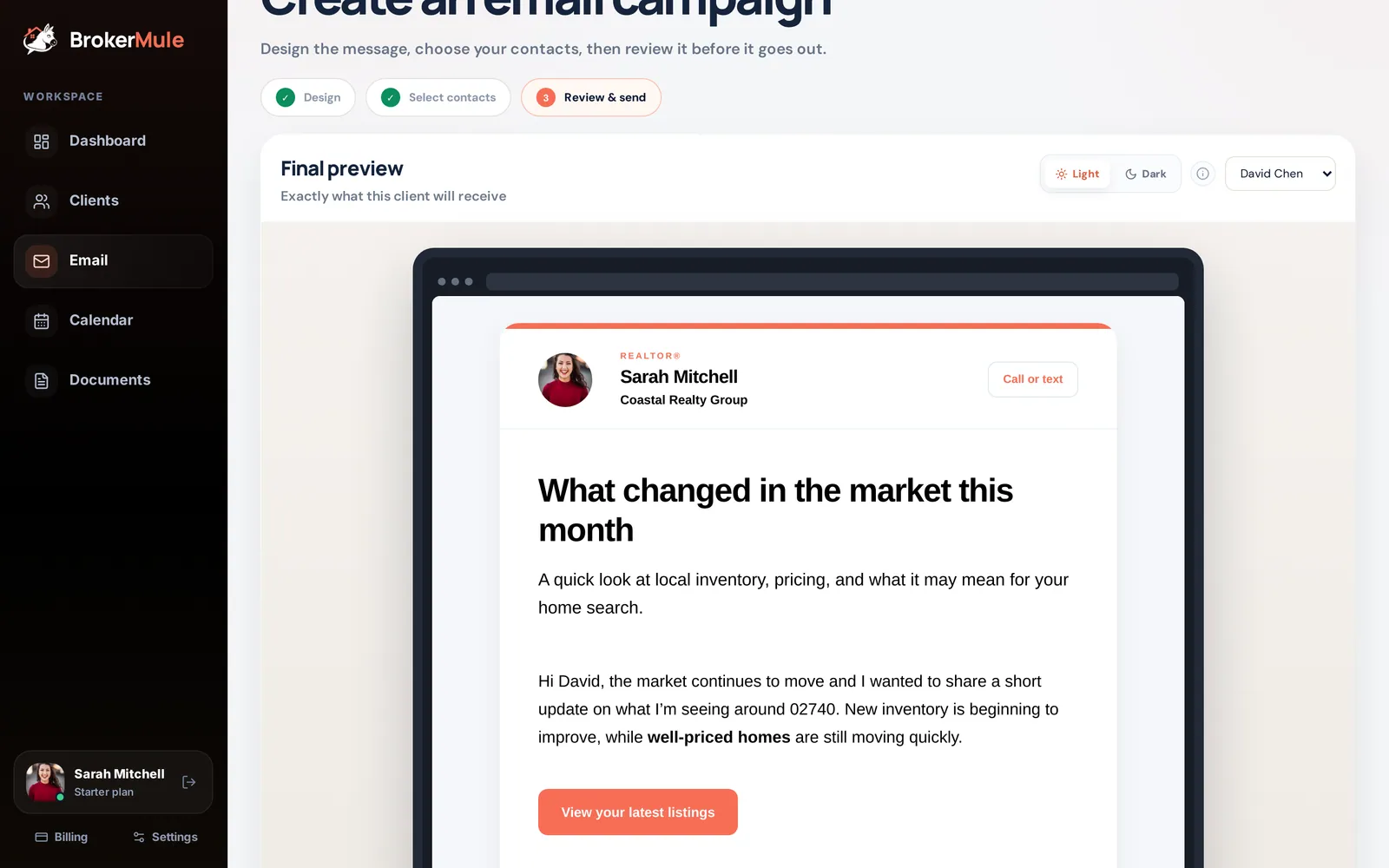 Email campaignsPick a template, personalize it, choose recipients, send yourself a test, then send. Includes merge tags and monthly email limits.
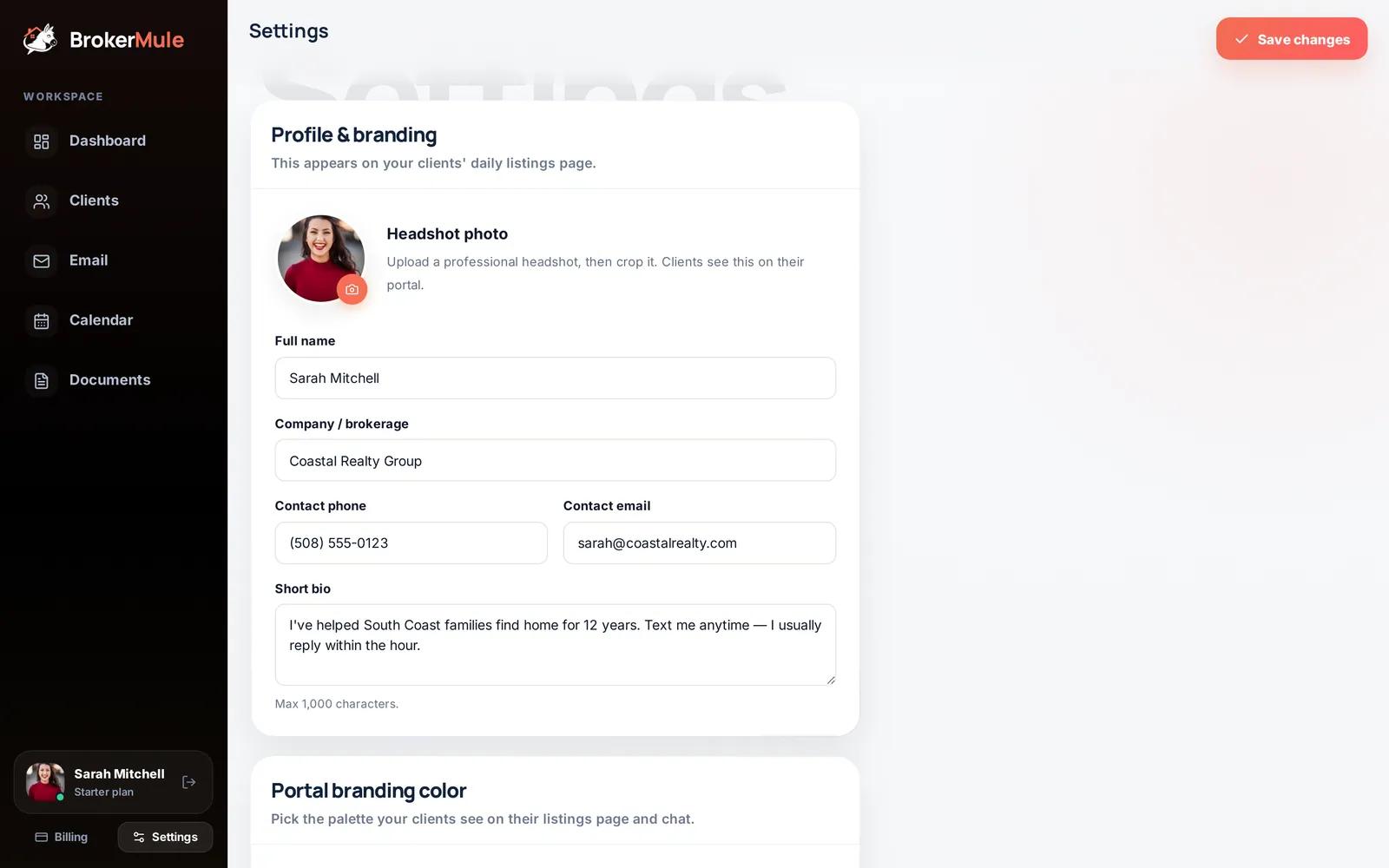 Settings & brandingYour headshot, bio, brokerage, portal color palette and contact buttons: everything buyers see on your portal and invite page.
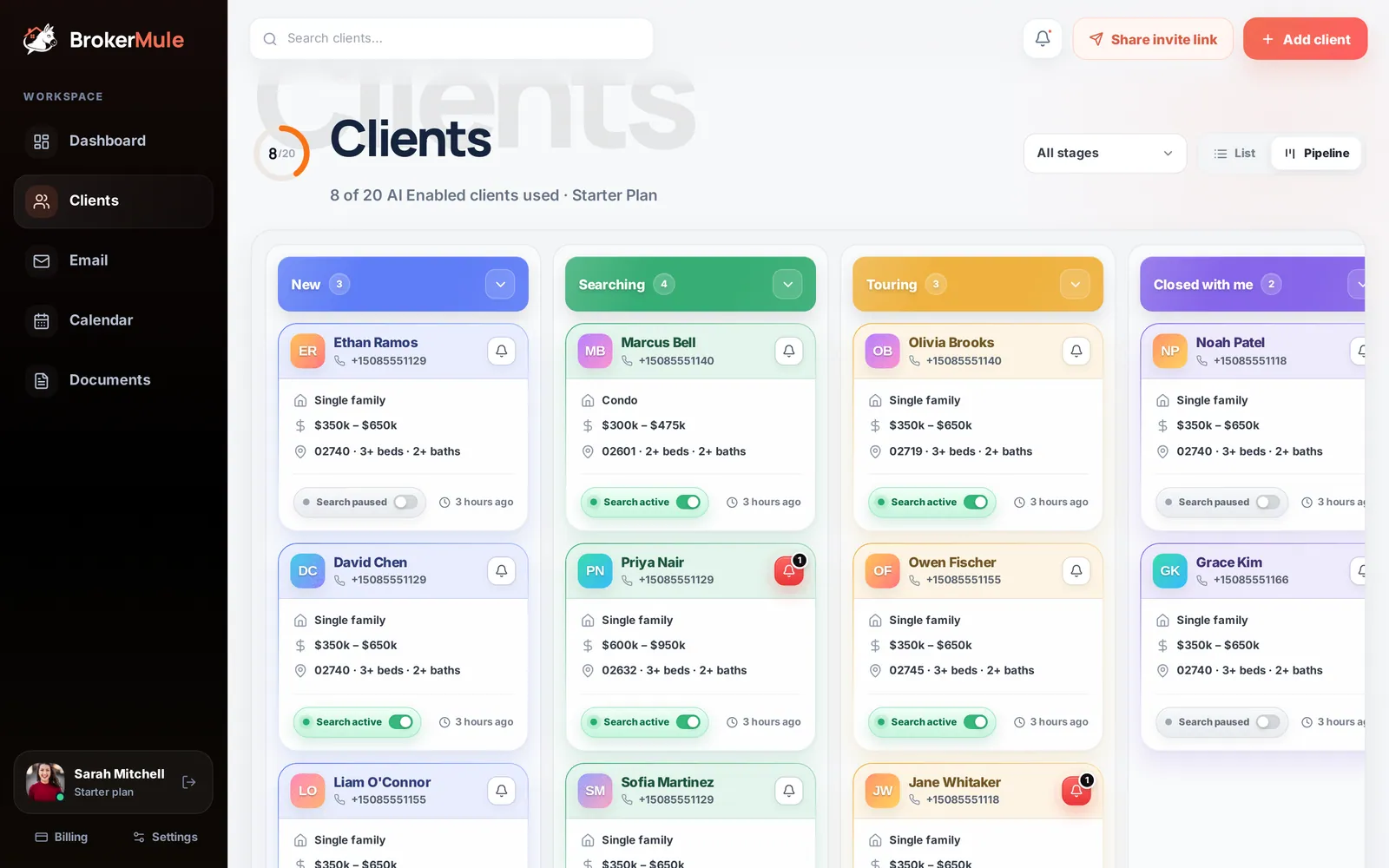 Managing clientsUse the pipeline board and list view to organize buyers by stage, search and filter your book, and turn texts on or off per client.
Frequently asked questions
What should be in a real estate newsletter?
A few local market numbers, a handful of homes or recent sales, one practical tip and a short personal note, with an easy way to reply.
How often should a real estate agent send a newsletter?
Monthly works for most agents. Active buyers should also get more frequent, personal updates with matching homes.
What are good real estate newsletter subject lines?
Specific ones that promise something local and useful, like “What sold on your street this month” or “3 homes under $600k worth seeing this weekend.”
Do real estate newsletters need an unsubscribe link?
Yes. Commercial emails in the U.S. need a clear way to opt out under the CAN-SPAM Act, and it is good practice regardless.
Sources
Competitor pricing and features change often. These were the references used when this page was last reviewed — verify anything critical before making a purchase decision.
Keep reading
 Lead follow-upHow to Stay in Touch With Past Clients: A 12-Month Plan for Real Estate Agents
A month-by-month plan for staying in touch with past buyers, so the referrals keep coming.
 Lead follow-upReal Estate Drip Campaign Examples: Text and Email Sequences That Don’t Feel Automated
Three ready-to-use drip sequences for buyers, with the exact texts and emails, and how to keep them personal.
 Lead follow-upReal Estate Lead Nurturing: How to Stay Top of Mind With Buyers Who Aren’t Ready Yet
A simple system for buyers who are months away: what to send at each stage and how to spot when they’re ready.